

Ask any fashion retail store owner what keeps them up at night before wedding season, and pricing math usually comes up. You know sharara sets sell — customers keep asking for them — but working out how much to order, at what price point, and from which supplier without overcommitting your budget is where most retailers get stuck. Order too conservatively and you’re restocking mid-season at a premium. Order too aggressively on an untested design and you’re left with unsold inventory come June.
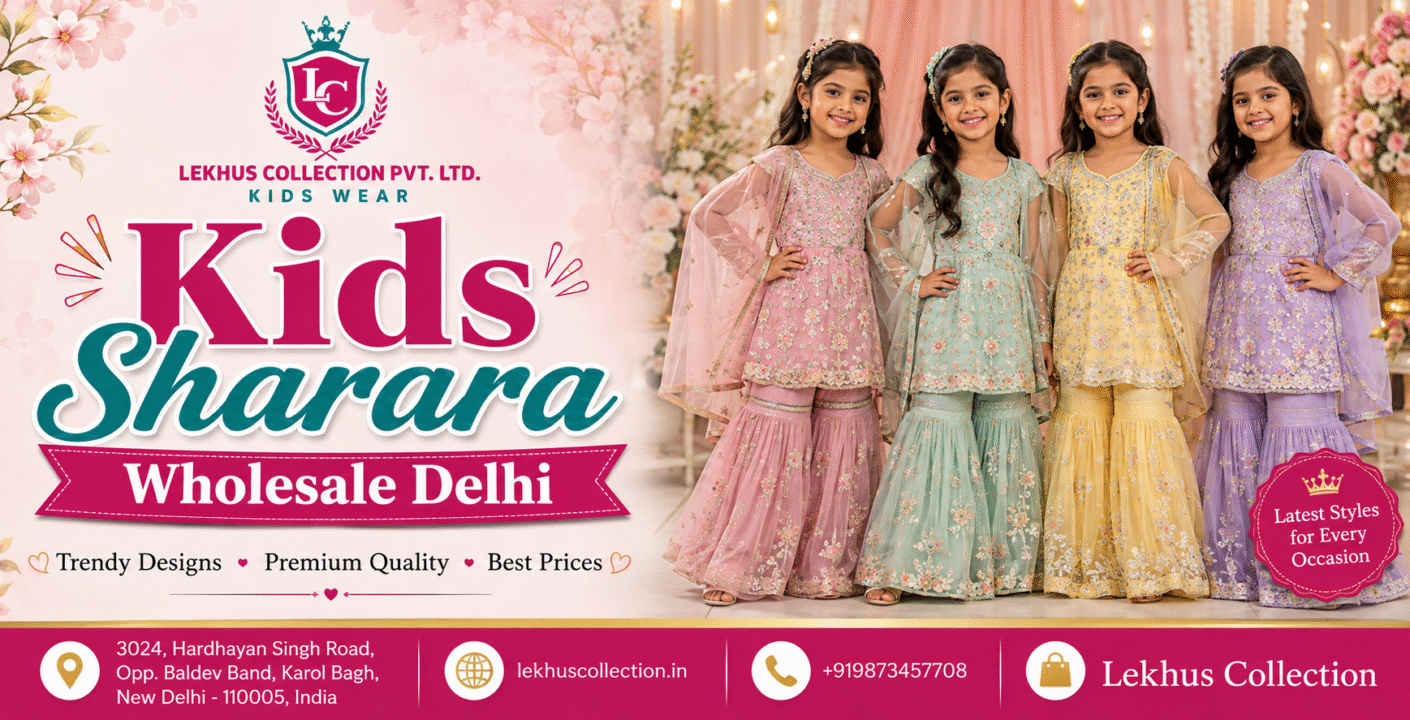
This is the practical side of Kids Sharara Wholesale Delhi sourcing that doesn’t get talked about enough — not just “where to buy,” but how to buy smart. This guide takes a retailer’s-eye view: pricing logic, supplier vetting, and the operational side of stocking sharara sets profitably for a fashion retail store.
Quick Answer: For fashion retail stores, kids sharara wholesale in Delhi is most cost-effective when sourced directly from manufacturers in markets like Gandhi Nagar or Karol Bagh, cutting out distributor markups. Pricing typically depends on fabric, embellishment level, and order volume, with better per-piece rates unlocked at higher quantities. Retailers should always request samples, confirm sizing charts, and test smaller trial batches before scaling into bulk festive orders.
Sourcing Sharara Sets Through a Retail Lens
Most sourcing guides talk about sharara sets from a product perspective — fabric, design, embellishment. That’s useful, but if you’re running a retail store, your real questions are different: What should I stock? How much should I pay? How do I avoid dead inventory sitting on my shelves after the wedding season ends?
A fashion retail store thinks in terms of sell-through rate, margin per unit, and seasonal turnover — not just “does this look nice.” That’s the lens this guide takes, because sourcing decisions that ignore these factors tend to look good on a supplier’s catalogue but perform poorly once they hit your shop floor or your online store listings.
Why Retail Stores Specifically Need a Different Sourcing Approach
A boutique working purely on pre-orders can afford to wait for embellished, made-to-order pieces. A retail store with walk-in footfall or an active e-commerce catalogue needs ready stock, predictable sizing, and enough design variety to convert browsing customers into buyers on the spot. That changes what “the right supplier” looks like for you.
How Wholesale Pricing Actually Works
Wholesale sharara pricing in Delhi isn’t a flat number — it moves based on a few clear factors, and understanding this helps you negotiate and budget more accurately.
- Fabric type — georgette and cotton-silk blends sit at the lower end; silk and net with heavy embellishment cost more.
- Embellishment level — plain or minimal thread work costs less than dense embroidery, sequins, or mirror work.
- Order volume — most manufacturers offer tiered pricing, meaning your per-piece cost drops as quantity increases.
- Customization — private labeling or custom color combinations typically carry a small premium over standard catalogue designs.
Comparing Sourcing Routes for Retail Stores
| Sourcing Route | Pricing | Best For |
| Direct Manufacturer | Lowest, but often higher MOQ | Established stores with steady bulk demand |
| Wholesale Distributor | Slightly higher, lower MOQ | Newer stores testing demand before scaling |
| Online B2B Marketplace | Moderate, varies by seller | Retailers sourcing remotely, outside Delhi |
| Trade Fairs / Exhibitions | Competitive, negotiable on-site | Discovering new suppliers and seasonal collections |
Many established retail stores actually use a mix of these routes — direct manufacturer ties for bestsellers, and distributors or marketplaces for testing new designs.
Why Retail Stores Should Stock Sharara Sets
- High visual appeal — Sharara sets photographs well, which helps both in-store displays and online product listings.
- Strong seasonal demand — Wedding and festival seasons create predictable, recurring purchase windows.
- Good margin potential — Ethnic festive wear typically carries better margins than daily wear categories.
- Cross-sell opportunity — Sharara sets pair naturally with accessories like jewelry, footwear, and dupattas, boosting basket size.
- Repeat customer potential — Parents often return for matching sets across siblings or for multiple family functions in a season.
Buying Guide for Fashion Retail Stores
Retail Stocking Framework
| Stage | What To Focus On |
| Pre-Season (8-10 weeks out) | Research trending designs, finalize 2-3 suppliers, request samples |
| Trial Order (6-8 weeks out) | Order a small batch across sizes and 3-4 designs to test sell-through |
| Bulk Order (4-6 weeks out) | Scale up on designs that performed well in the trial phase |
| Peak Season | Keep a fast-reorder line open with your supplier for bestsellers |
| Post-Season | Review sales data and note which designs to prioritize next year |
Treating sharara sourcing as a seasonal cycle, rather than a one-time order, is what separates consistently profitable retail stores from ones that scramble every year.
Trends Shaping Retail Demand
A few shifts are worth building into your buying strategy this year:
- Smaller, frequent restocks are replacing single massive bulk orders, as retailers try to avoid overstock risk.
- Size-inclusive collections, especially in plus sizes for kids, are seeing rising demand and remain underserved by many suppliers.
- Co-ord and mix-and-match sharara sets allow retail stores to offer more styling combinations from fewer base pieces.
- Social-media-driven demand spikes mean certain colors or styles can suddenly trend, so keeping some buying flexibility helps you react quickly.
Mistakes That Hurt Retail Margins
These aren’t just quality issues — they’re the mistakes that quietly eat into a retail store’s profitability season after season.
- Over-ordering unproven designs — Without a trial phase, you risk large unsold quantities in untested styles.
- Ignoring reorder lead times — Some suppliers need 2-3 weeks for repeat batches; not planning for this leads to missed peak-season sales.
- Underpricing due to poor cost tracking — Not factoring in embellishment-level cost differences can quietly shrink your margins.
- Single-supplier dependency — Relying entirely on one manufacturer leaves you exposed if they run into delays or stock shortages.
Expert Tips for Retail Buyers
- Track sell-through rate by design, not just total sales — this tells you which specific styles to reorder.
- Negotiate a reorder clause with your primary supplier so bestsellers can be replenished quickly during peak weeks.
- Set a clear markup formula based on fabric and embellishment tier, so pricing stays consistent across your catalogue.
- Bundle accessories like matching dupattas or jewelry with sharara sets to increase average order value.
- Keep a small buffer budget for reactive restocking if a particular design trends unexpectedly on social media.
Frequently Asked Questions
1. What is a realistic markup for kids sharara sets in a retail store?
Markups vary by market and positioning, but ethnic festive wear typically supports a healthier margin than daily wear, especially on mid-to-premium embellished pieces.
2. How many designs should a retail store stock per season?
It depends on store size, but starting with a focused range of 8-12 designs and expanding based on trial sell-through data is a safer approach than stocking too broadly upfront.
3. Should I order from one supplier or multiple suppliers?
Using 2-3 suppliers is generally safer for retail stores, reducing the risk of delays or shortages from any single source during peak demand.
4. How do I decide how much stock to order for wedding season?
Base your bulk order on trial batch performance from 6-8 weeks earlier, rather than guessing quantities without any sales data.
5. Is it worth attending trade fairs to source kids sharara sets?
Yes, trade fairs are useful for discovering new suppliers and negotiating pricing directly, especially for retailers exploring options beyond their regular supplier base.
6. What size range should a retail store prioritize?
Mid-range children’s sizes typically see the highest demand, but including a few pieces in smaller and larger sizes helps avoid missed sales at the edges of your size curve.
7. How quickly can I get a reorder during peak wedding season?
This varies by supplier, so it’s worth confirming reorder lead times upfront and prioritizing suppliers who can turn around repeat batches within 1-2 weeks during peak demand.
8. Do online B2B platforms offer the same pricing as direct manufacturer sourcing?
Online platforms are usually slightly higher due to added convenience and lower MOQs, while direct manufacturer sourcing offers better rates but often requires larger order commitments.
9. What’s the biggest risk in wholesale sharara buying for new retail stores?
Over-ordering unproven designs without testing demand first is the most common risk, often leading to unsold inventory after the season ends.
10. Can I return unsold sharara stock to my wholesale supplier?
Return policies vary significantly by supplier, so it’s important to clarify this upfront rather than assuming unsold stock can be returned or exchanged later.
Conclusion
Sourcing kids sharara wholesale in Delhi works best when treated as a seasonal business cycle, not a one-time purchase. Retail stores that plan pre-season, test with trial batches, and track sell-through data consistently outperform those who order large quantities on instinct alone. Pricing, supplier relationships, and reorder speed all matter just as much as the designs themselves.
At Lekhus Collection, we work with fashion retail stores who need more than just good-looking stock — they need dependable pricing, quick reorder turnaround, and designs that actually sell through. If you’re planning your next sharara collection, connect with Lekhus Collection today and build a sourcing plan that fits how your store actually sells.
Visit: https://lekhuscollection.in/
Call: +91-9873457708
Email: info@lekhuscollections.com
Address: 3024, Hardhayan Singh Road, Opp. Baldev Band, Karol Bagh,New Delhi – 110005, India